
A free Aikido trial class gives you an opportunity to experience the dojo before deciding whether Aikido is right for you or your child.
You do not need previous martial arts experience, knowledge of Japanese terminology, or the ability to perform Aikido techniques before attending. The purpose of your first class is much simpler: experience the training, meet the people, and begin learning.
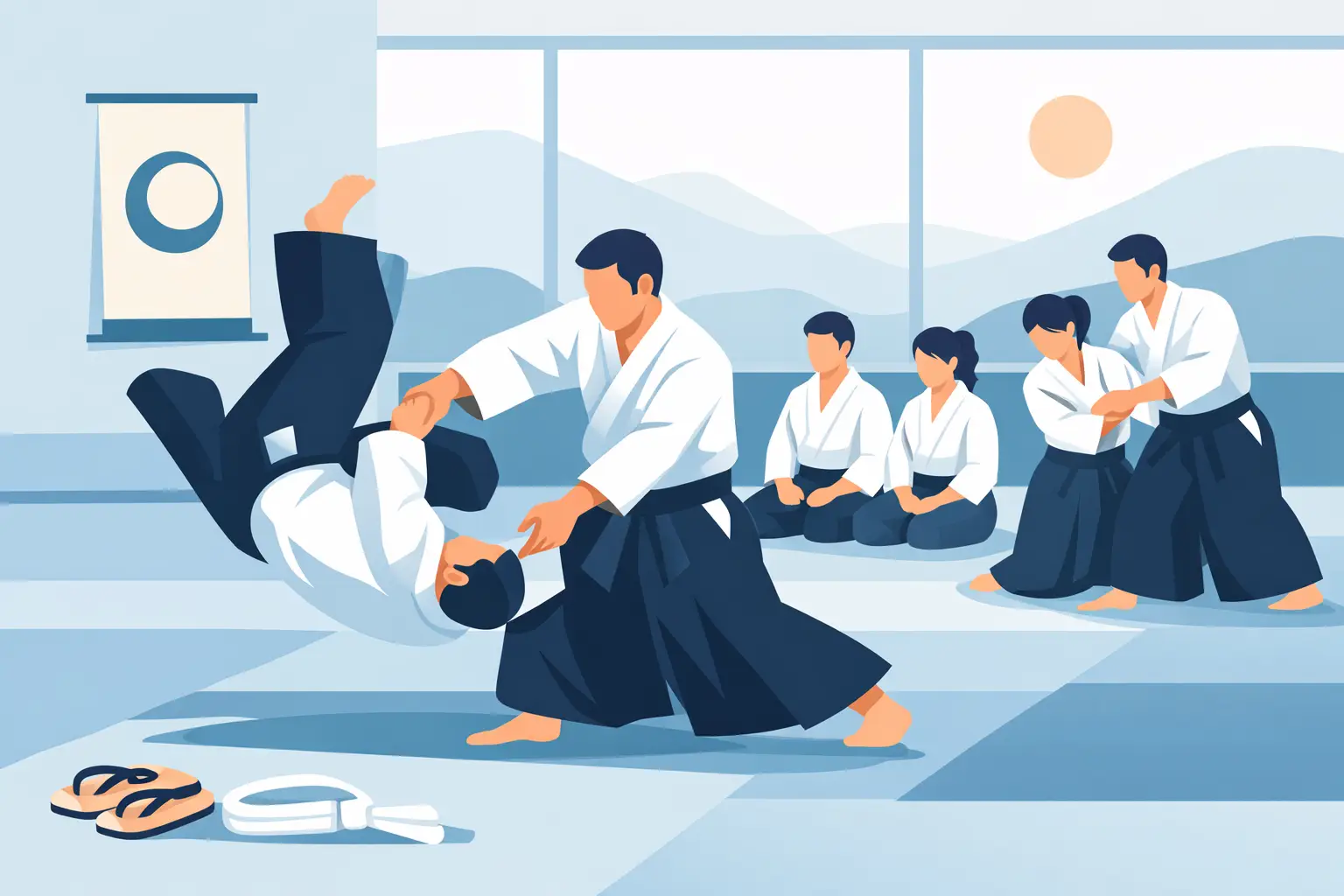
Arrive About 15 Minutes Early
For your first visit to Tri City Aikido, please arrive approximately 15 minutes before class begins.
This gives us time to meet you before everyone steps onto the mat. It also allows you to become familiar with the dojo, ask questions, and take care of anything necessary before training begins.
Arriving early is particularly helpful for children. Walking into an unfamiliar environment can be intimidating for some kids, and having a few minutes to look around and meet the instructor makes the transition into class much easier.
Once class begins, we want your attention—or your child's attention—to be on the training rather than paperwork or figuring out where everything is.
What Should You Wear?
You do not need to purchase a martial arts uniform for a trial lesson.
Wear comfortable clothing that allows you to move freely. Avoid clothing with hard buttons, zippers, jewelry, or anything else that could become uncomfortable during partner practice.
Aikido is practiced barefoot on the mat.
If you decide to continue training, you will eventually wear a traditional martial arts uniform called a gi. For the first class, however, comfortable exercise clothing is enough.
Tell the Instructor About Physical Limitations
Before training begins, let the instructor know about any injuries, previous surgeries, mobility restrictions, or other physical limitations that may affect your participation.
This is not something you need to hide because you are worried about appearing incapable.
People arrive at martial arts with different bodies and different histories. Knowing about a limitation allows the instructor to make appropriate decisions about how you should participate.
That is particularly important when introducing falling, rolling, joint movement, and partner exercises.
Class Begins With Dojo Etiquette
Your first unfamiliar experience may happen before the first technique is demonstrated.
Aikido is a traditional Japanese martial art, and the dojo maintains customs associated with that tradition. Students bow when entering the training area and class formally begins and ends with a bow.
You are not expected to know the etiquette beforehand.
Watch what the instructor and other students are doing and follow along. If you are unsure, someone will help you.
Bowing is an expression of respect and acknowledgement. It also creates a clear transition: whatever happened during the rest of your day stays outside for a while. When class begins, your attention belongs on the mat.
You Will Not Be Expected to Keep Up With Everyone
One of the biggest concerns beginners have is that everyone else will know what they are doing.
They're right.
Some students will know considerably more than you do—and that's exactly what should happen in an established dojo.
You are not expected to perform at their level.
An experienced student may have practiced a movement thousands of times. Comparing your first attempt with their years of training would make very little sense.
Your responsibility during a trial class is simply to listen, make a reasonable attempt, ask questions when necessary, and train safely.
Your First Movements Will Be Basic
Aikido techniques can involve throws, joint controls, pins, turns, entries, and complicated combinations of movement.
That isn't where a beginner needs to start.
Before a technique can become effective, students need basic posture, balance, footwork, distance, and an understanding of how to move their bodies.
Your first lesson may therefore contain movements that appear relatively simple.
Simple does not mean unimportant.
The fundamentals you begin learning during the first class will continue appearing in more advanced techniques years later.
You May Begin Learning How to Fall
Because Aikido contains throwing techniques, students must learn how to safely receive them.
This practice is called ukemi.
Depending upon the class and the individual student, a beginner may be introduced to basic falling or rolling movements during an early lesson.
You will not be expected to walk into the dojo and immediately perform advanced falls.
Ukemi should develop progressively. Students begin with manageable movements and increase the difficulty as coordination, confidence, and ability improve.
If falling makes you nervous, tell the instructor. Being cautious about an unfamiliar physical movement is completely reasonable.
You Will Probably Work With Another Student
Aikido is partner training.
Although some movements can be practiced individually, understanding Aikido requires another person.
One student provides an attack while the other practices the technique. The roles then reverse.
As a beginner, you may be paired with someone who already understands the exercise. That is an advantage, not something to be embarrassed about.
Experienced students learn how to adjust their training to someone with less experience. They can help you understand where to stand, how to move, and what the instructor is asking you to do.
Later, when you become the experienced student, you will be expected to provide that same assistance to someone else.
Expect to Make Mistakes
Your first Aikido class may feel awkward.
Your feet may go in the wrong direction. You may forget which hand is supposed to move. The instructor may demonstrate something that looks obvious until you attempt it yourself.
That is normal.
Martial arts involve movements most people have never had a reason to perform before. The body needs time and repetition before those movements become familiar.
Mistakes are not evidence that you are bad at Aikido.
They are evidence that you have just started learning Aikido.
What Parents Should Watch During a Trial Class
If your child is taking the free trial, you can learn quite a bit by watching the class.
Don't focus only on whether your child performs the techniques correctly. They are new; they probably won't.
Instead, watch how they respond to the environment.
Are they listening to the instructor? Are they willing to attempt unfamiliar movements? How do they interact with other children? How does the instructor correct them? Do more experienced students help them?
Also pay attention to the structure of the class.
Children should understand that martial arts training has standards while still feeling comfortable enough to make mistakes and learn.
At Tri City Aikido, children's classes are separated by age so the instruction, expectations, and physical demands can better match the students' stage of development.
What Adult Beginners Should Remember
Adults bring a different set of concerns to their first class.
Some worry they are too old. Others haven't exercised regularly for years. Some have previous martial arts experience and wonder how much of it will transfer to Aikido.
None of those questions need to be answered before you walk through the door.
Start where you are.
An adult beginner should concentrate on learning the movements safely rather than trying to prove their physical ability during the first class.
Speed, endurance, flexibility, coordination, and falling ability can develop with training. There is no advantage in rushing the process.
Don't Judge Aikido by Whether You Can Do It Yet
This is an important distinction.
After your trial class, don't ask only:
“Was I good at it?”
You probably weren't. You just started.
A better question is:
“Was I interested enough to learn how to become good at it?”
Martial arts are learned over years, not during an introductory lesson.
Your first experience should give you some idea whether you find the training interesting, whether you respect the instruction, and whether you feel comfortable enough in the dojo to return.
Ask Questions After Class
Once class is finished, ask anything that wasn't clear.
You may want to know how frequently students train, how promotions work, when weapons training begins, what uniform is required, or what happens next if you decide to enroll.
Parents may have questions about the appropriate age group, attendance, expectations, or how their child responded during the lesson.
Questions are welcome.
A martial arts school should be able to explain what it teaches, how it teaches it, and what it expects from its students.
The Trial Class Works Both Ways
A free trial class isn't simply an opportunity for you to evaluate Tri City Aikido.
It also gives us an opportunity to meet you.
A dojo is a community of people who depend upon one another for training. Students need partners who are willing to learn, follow safety rules, accept instruction, and contribute positively to the training environment.
That relationship works best when the dojo and the prospective student are a good match for one another.
Your First Aikido Class in Fremont
Tri City Aikido has taught Traditional Japanese Aikido in the Fremont area for more than 30 years, with programs for both children and adults.
If you're curious about Aikido, you don't need to understand everything about the art before trying it.
That's what the trial class is for.
Arrive approximately 15 minutes early, wear comfortable clothing, tell us about any physical concerns, and come prepared to learn something unfamiliar.
You may leave your first class with more questions than you had when you arrived.
That's perfectly fine.
The important question is whether you're interested enough to come back and learn the answers.