Enjoying Martial Arts without actually Fighting
Most adults don't join a martial arts school because they're looking for a fight. They join because they want to train.
There is an important difference. Fighting carries the possibility of serious injury and should be a last resort. Training gives you the opportunity to develop martial arts skills while enjoying the exercise, challenge, friendships and exhilaration that come from actually doing something instead of simply watching.
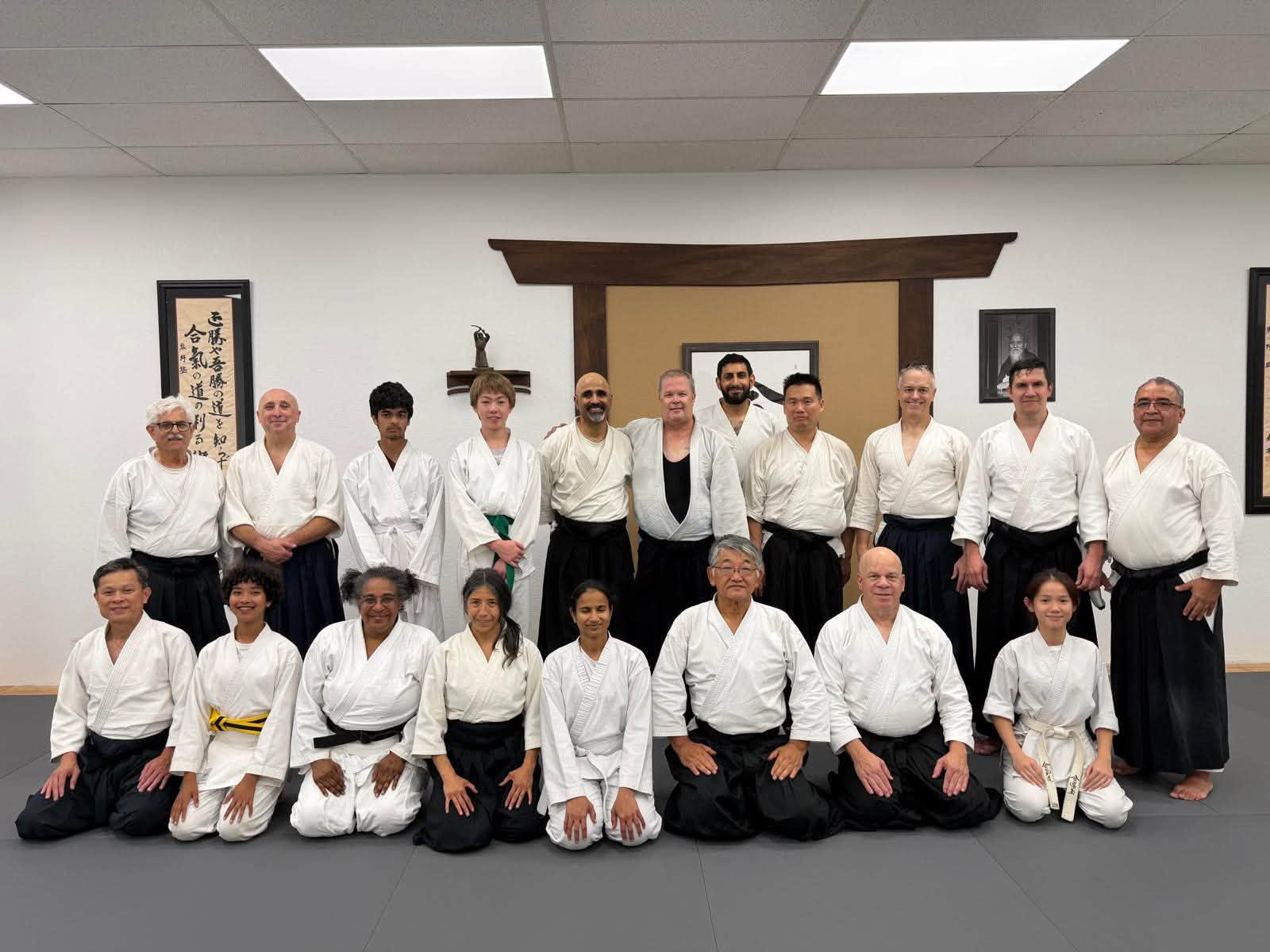
At Tri City Aikido in Fremont, adults practice traditional Aikido in a non-competitive environment. You don't need previous martial arts experience, exceptional strength or a desire to prove yourself against the person standing across from you.
You just need the willingness to participate.
Exercise That Doesn't Feel Like Exercise
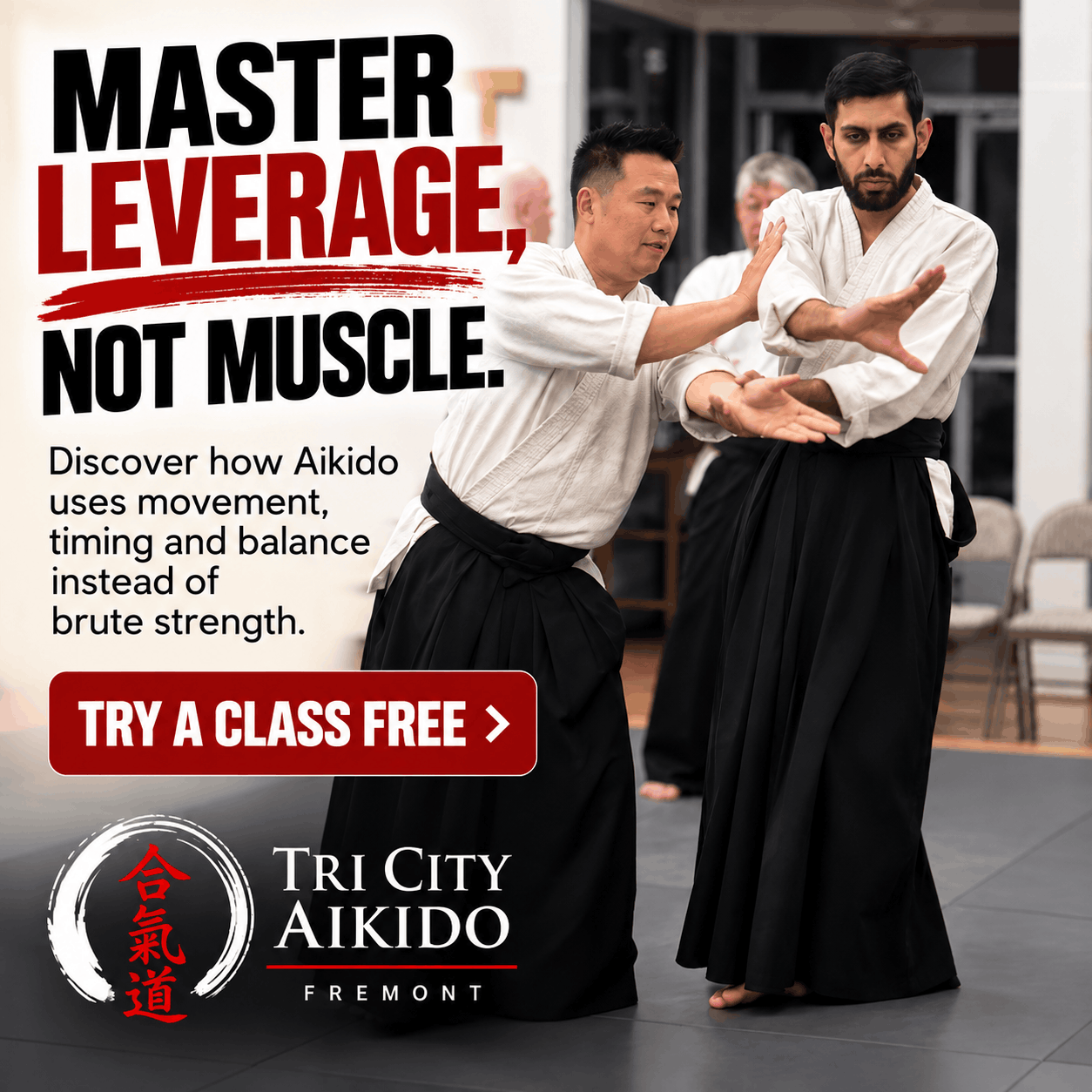 There are plenty of ways to exercise. You can run, ride a bicycle, lift weights or spend an hour on a machine at the gym. All of them can improve your health.
Aikido gives you something different.
During class you're getting up and down from the mat, changing direction, working with different partners and repeatedly moving your body through techniques. Your heart starts beating harder. You sweat. You breathe harder. Then those endorphins kick in.
But while your body is working, your mind is occupied with learning something. You're improving a roll, figuring out your footwork, working on timing or trying to understand why a technique isn't quite working yet.
Before you know it, class is over. You're physically tired, mentally refreshed and you've spent the evening learning instead of watching the clock on a treadmill.
Training can be exhilarating without being a fight.
Training Is Not Fighting
Sometimes people have difficulty separating martial arts training from fighting. But nearly every martial art develops its skills through exercises that aren't fights.
When a boxer works a speed bag, that's training. When a wrestler runs to improve conditioning, that's training. When a Judo practitioner repeatedly practices falling skills, that's training too.
Aikido works the same way.
We practice falling. We practice timing, distance, balance, footwork and technique. We practice throws and controls. As students progress, training can also include the bokken (wooden sword) and jo (staff).
Each exercise develops something specific. What you're watching during an Aikido class isn't supposed to be a fight.
You're watching people train.
Your Training Partner Helps You Improve
 Traditional Aikido is non-competitive. There are no tournaments to prepare for and no scoreboard determining whether your evening was successful.
Instead, students work together. One person provides the attack while the other practices the technique, and then the roles reverse.
Your partner isn't the person preventing you from succeeding. Your partner is helping you succeed.
That doesn't mean your partner simply falls down or gives you the technique. Good training provides enough energy and resistance to make the practice meaningful while allowing both people to develop their skills safely. As experience increases, the speed and difficulty of training can increase with it.
The objective isn't to determine who is better. The objective is for both people to leave the mat better than when they stepped onto it.
There Is a Social Side to Aikido
One of the benefits of martial arts training is easy to overlook until you actually join a dojo: you meet people.
You train with different partners. You struggle with the same techniques. You help each other improve. You laugh when something doesn't go as planned. Experienced students help beginners, and eventually those beginners become the people helping someone else.
Friendships develop naturally because you're doing something together.
For adults with work, family and other responsibilities, opportunities to meet people while doing something healthy and interesting can become surprisingly rare.
Aikido gives you exercise, learning and social interaction in the same place.
Learn Something While Getting in Shape
Aikido develops balance, coordination, flexibility and body awareness through movement. But progress isn't measured only by how hard you can exercise.
A roll that felt uncomfortable when you started becomes natural. Your balance improves. A movement that required several conscious steps begins happening without as much thought. You start recognizing timing and distance that you couldn't see before.
There is always something else to improve.
That's one reason Aikido can remain interesting long after the novelty of beginning an exercise program has disappeared. You're not simply repeating a workout. You're developing a skill.
Self-Defense Without Looking for a Fight
Aikido is a martial art. Training includes grabs, strikes, throws, joint controls, pins, movement, falling and traditional weapons practice.
But learning martial arts doesn't mean looking for opportunities to use them.
A real fight is unpredictable. There is no referee, no weight class and no guarantee that another person is unarmed. People can suffer serious injuries over situations that were never worth fighting about in the first place.
Avoiding a fight when possible isn't weakness. It's good judgment.
The dojo gives you a place to develop physical skills, movement, awareness and composure without needing actual violence in your life.
Stop Watching. Start Participating.
Most of us spend an incredible amount of time watching other people do things.
We watch sports. We watch videos. We scroll through social media. We watch other people exercise, compete, travel, learn skills and have experiences.
It's very easy to become a spectator of life.
Walking onto the mat changes your role.
Now you're the person learning to roll. You're practicing the technique. You're holding the sword. You're sweating, making mistakes, laughing with your training partners and discovering things you couldn't do before.
You aren't watching someone else's experience.
You're having one of your own.
Adult Aikido Classes in Fremont
Tri City Aikido offers traditional adult Aikido classes in Fremont for beginners and experienced martial artists. You don't need to be in great shape before starting. Training is how you begin improving.
You don't need previous martial arts experience. You don't need to be naturally athletic. And you certainly don't need to want to fight.
You just need to stop watching long enough to participate.
Adult Class Schedule
Monday, Wednesday & Friday: 7:00-8:30 PM
Saturday: 9:30-11:30 AM
Frequently Asked Questions About Adult Martial Arts in Fremont
1. Where can adults take martial arts classes in Fremont, CA?
You've watched other people accomplish impressive things. What would happen if you gave yourself the opportunity to be the one learning something new?
At Tri City Aikido in Fremont, adult martial arts classes offer more than another way to spend an evening. You can develop practical self-defense skills, improve your movement and fitness, and enjoy the challenge of mastering techniques that once seemed unfamiliar. Since 1996, thousands of students have trained at our dojo.
You don't need experience or a competitive streak. You need a starting point. Your first introductory class is free, so you can stop wondering and discover what training feels like.
2. Am I too old to start martial arts at 40, 50, or 60?
Yes, you can start later in life. But perhaps the more important question is: How much longer do you want to put off something you've been curious about?
We've had students training into their seventies. Traditional Aikido emphasizes balance, timing, movement and leverage, and instruction progresses according to each student's experience and abilities. Nobody expects you to move like a twenty-year-old on your first day.
Five years from now, you'll be five years older either way. Imagine what those years could hold if you spent some of them developing a skill you're proud of. Come try a class and decide for yourself what feels possible.
3. Are there self-defense classes for adults in Fremont?
Yes. And the value of self-defense training begins long before anyone faces a confrontation. Imagine being more aware of your surroundings, more deliberate in your movement and better able to stay composed under pressure.
Our adult self-defense training in Fremont uses traditional Aikido to explore positioning, balance, timing, joint controls, throws and redirecting force. Just as important, students learn that avoiding a dangerous confrontation whenever possible is a sign of sound judgment, not weakness.
You cannot control every situation, and no training guarantees an outcome. But you can choose to develop greater awareness, understanding and skill. That choice begins with practice.
4. Do I need to be physically fit to start martial arts classes?
No. You don't have to get into shape before joining an adult martial arts class. That's like insisting you must know how to swim before taking swimming lessons.
You start where you are. At Tri City Aikido, beginners gradually learn footwork, balance, falling skills and partner techniques. The physical challenge can grow as your confidence, conditioning and coordination develop. You'll discover what your body can do today and what consistent practice may help you do tomorrow.
Don't make fitness a requirement for starting. Make training one of the reasons you begin improving. We'll help you take that first step at a manageable pace.
5. What martial art can adults learn without fighting or competing?
If you're looking for martial arts without tournaments, competitive sparring or the pressure to defeat someone else, traditional Aikido may be exactly the experience you've been missing.
At Tri City Aikido, your partner helps you improve. You take turns practicing attacks and techniques, adjusting your movement and discovering why something works. There's challenge, effort and plenty to learn, but no scoreboard deciding your worth.
Your real competition is the person you were yesterday. Imagine leaving class knowing you moved a little better, understood a little more and helped someone else improve along the way.
6. Can adults learn self-defense without being strong or athletic?
Absolutely. Being strong may help in many activities, but strength alone isn't the foundation of traditional Aikido.
We teach movement, timing, positioning, balance and leverage because technique gives you something to develop beyond raw physical power. You may arrive believing you're not athletic enough. Then you begin to understand how a small change in footwork or body position can make a remarkable difference in practice.
Progress takes patience, and real confrontations remain unpredictable. Still, you don't have to possess extraordinary ability to begin developing useful skills. You only have to be willing to learn.
7. Are martial arts classes a good workout for adults?
Yes—and here's the appealing part: you may be too busy learning to spend the entire class thinking about exercise.
In adult Aikido training, you're moving across the mat, practicing falls, changing direction, working with partners and refining techniques. You're challenging your body while giving your mind a problem worth solving. Instead of watching the clock, you're wondering whether you can make that next movement smoother.
You come for the martial arts. The workout becomes part of the adventure. If another repetitive fitness routine doesn't excite you, perhaps learning a lifelong skill will.
8. What happens during my first adult martial arts class?
It's normal to feel uncertain before walking into a martial arts dojo. Will you keep up? Will everyone else know what they're doing? Will you look awkward? Here's the reassuring answer: every experienced student once stood where you stand now.
Your free introductory class at Tri City Aikido is an opportunity to meet people, see how we train and try beginner-appropriate movements. You're not expected to perform advanced techniques or prove yourself against experienced students. We want you to learn, ask questions and get a feel for the atmosphere.
One visit can answer questions that weeks of reading never will. The first step is simply coming through the door.
9. Are there beginner martial arts classes near Newark and Union City?
Yes. If you live in Newark, Union City, Hayward or a nearby community, traditional adult martial arts training is available at Tri City Aikido in Fremont.
Maybe you've been searching for beginner martial arts classes because you want practical self-defense, a more engaging form of exercise or a new circle of friends. Our non-competitive dojo gives you the chance to pursue all three while learning Japanese Aikido with people who want to help you improve.
The opportunity to do something different may be closer than you think. Visit our Fremont dojo and experience your first class free.
10. Do adult martial arts students have to spar or compete?
No. You don't need to fight other students or enter tournaments to experience the challenge of martial arts.
In traditional Aikido, training partners work together. One provides an attack for the other to practice a technique, and then the roles change. As students gain experience, the training can become more demanding, but its purpose remains learning rather than winning.
Think about the freedom that creates: you can challenge yourself without needing someone else to lose. That makes room for meaningful practice, mutual respect and friendships that extend beyond the mat.
11. Can martial arts training improve balance and coordination?
Think of something you once found difficult that now feels natural. Maybe it was riding a bicycle, swimming or learning to drive. Your body learned through repetition—and martial arts offers that same satisfaction of progress.
Traditional Aikido gives you opportunities to practice posture, footwork, balance, rolling and coordinated movement. A step that feels awkward today may become smoother with time. As your awareness grows, you begin noticing details you couldn't recognize before.
Improvement isn't always dramatic. Sometimes it's the quiet realization that you can now do something you couldn't do last month. Those discoveries make returning to class worthwhile.
12. How often should beginners attend adult martial arts classes?
Imagine what you could learn in six months by setting aside just a few hours each week. Not by making a grand promise, but by showing up and practicing consistently.
Many beginners find that two or three classes per week offer useful opportunities to revisit techniques and build familiarity. Our adult classes meet Monday, Wednesday and Friday, 7:00–8:30 PM, and Saturday, 9:30–11:30 AM. Choose a schedule that fits your life and build from there.
You don't need to master Aikido this month. You only need to make the decision to begin. Your first class is free, and it's a practical way to see whether training belongs in your week.

The easiest way to understand Aikido isn't to read another description or watch another video. Come onto the mat and experience it.
Don't come to watch Aikido. Come find out what it feels like to do it.