
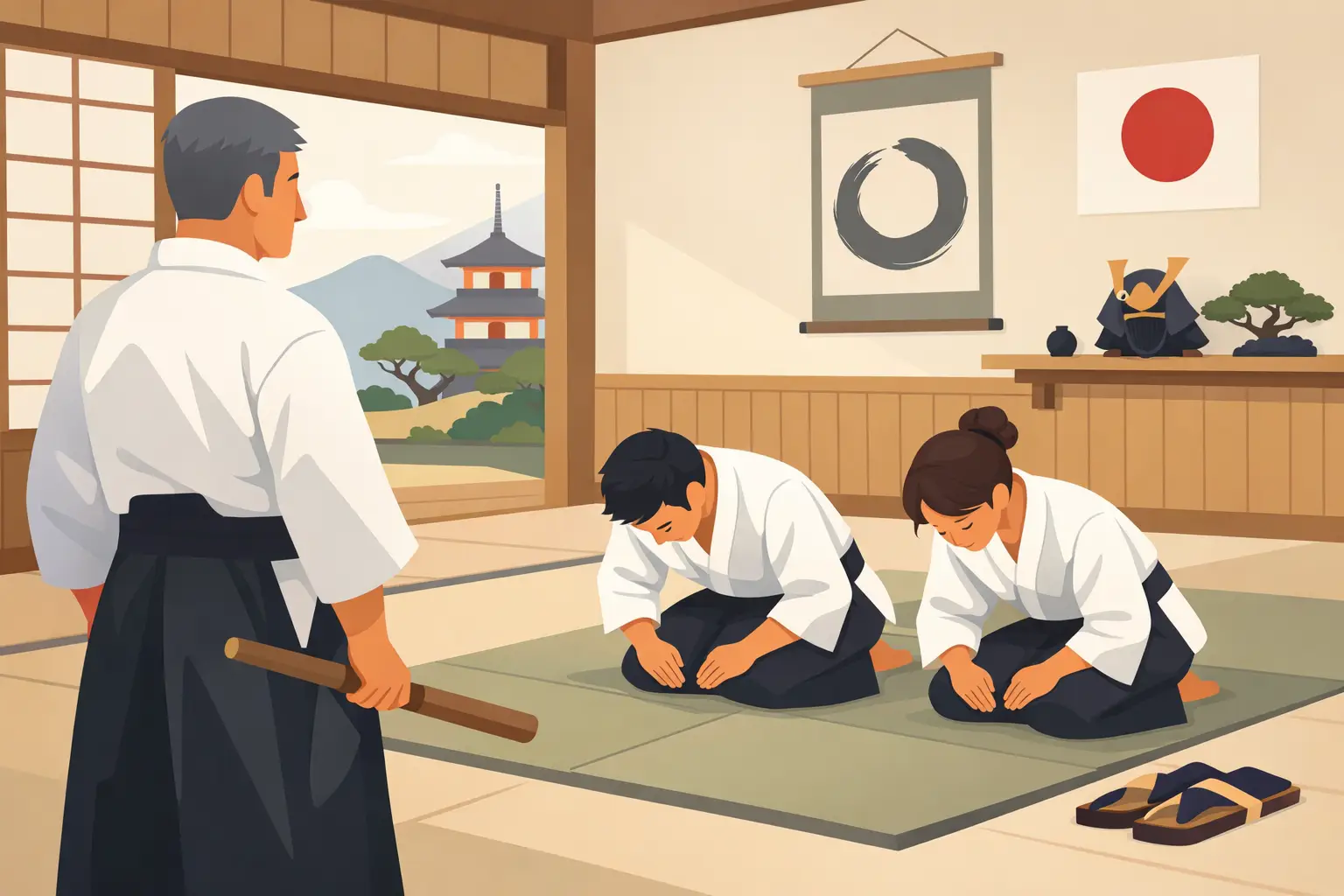
At a traditional dojo, etiquette and training support one another. A respectful bow is not about putting on a performance. Arriving ready to train helps class begin safely. Looking after your partner makes it possible to practice throws, pins, falls and joint controls with confidence. No one expects a first-time student to remember everything at once. Watch, ask when unsure and allow the routines to become familiar over time.
Why etiquette matters in Aikido
Aikido is practiced with another person, not against a scoreboard. Students take turns receiving and applying techniques, often at close range. This means attention, trust and self-control matter from the first lesson.
Dojo etiquette gives a group of different ages, abilities and experience levels a shared structure. It helps a child learn to wait, listen and respect boundaries. It helps an adult newcomer know when to step on the mat, where to stand and how to approach a senior student. It also protects the learning atmosphere from needless noise, rushing and roughness.
Traditional practices are part of this structure. At Tri City Aikido, instruction is rooted in the Aikikai tradition and a direct connection to Kumano Juku in Shingu, Japan. Students do not need to know Japanese language or customs before attending. They simply need a willingness to learn with care.
Japanese dojo etiquette beginners should learn first
Bow when entering and leaving the training space
A bow at the dojo entrance or the edge of the mat is a simple acknowledgment: you are entering a place set aside for practice. When leaving the mat, bow again. Keep it natural and unhurried. A small, sincere bow is enough.
At the beginning and end of class, the group may bow together. Follow the instructor and more experienced students. If you are not sure when to bow or where to sit, wait briefly and observe rather than guessing. You will quickly pick up the rhythm.
Leave shoes neatly off the mat
Outdoor shoes do not belong on the training mat. Remove them before stepping onto it and place them neatly in the designated area, with pairs together rather than scattered. This is partly a traditional custom, but it is also basic hygiene and safety. Mats are used for barefoot training, rolling and falling.
Make sure your feet are clean and keep toenails trimmed. If you have a foot injury, skin condition or anything that could affect safe barefoot practice, speak privately with the instructor before class.
Arrive early enough to settle in
Aim to arrive a few minutes before class begins. This gives you time to change, remove jewelry, use the restroom and be ready when class starts. Rushing onto the mat after everyone has lined up can interrupt instruction and leave you mentally behind.
Being late occasionally happens, especially for parents managing work, school and traffic. If you arrive after class has begun, do not simply join the line. Wait quietly at the edge of the mat until the instructor acknowledges you, then bow on and join as directed. This small pause shows respect for the class already in progress.
Wear clean, safe training clothing
For an introductory class, clean, comfortable exercise clothing is usually appropriate unless the dojo has given different instructions. Avoid clothing with hard zippers, sharp decorations or loose items that can catch during practice. As students continue, they commonly wear a clean martial arts uniform, known as a keikogi or gi.
Remove rings, watches, necklaces, earrings and other jewelry before training. Even a small ring can scratch a partner or catch during a wrist technique. Long hair should be tied back securely. Good hygiene matters as well: a clean uniform, fresh clothing and covered cuts are signs of consideration for the people training beside you.
Respect the instructor, your partner and the lesson
In a Japanese martial arts setting, instructors are often addressed as Sensei. The word means teacher, but its use in the dojo also reflects the instructor's responsibility for the group. Listen when Sensei is demonstrating, avoid side conversations and save questions until there is an appropriate pause.
You do not need to become silent or anxious about making a mistake. A good beginner asks for clarification when needed. The difference is timing. First watch the full demonstration. Then practice the exercise as shown. If you are confused, ask politely or seek guidance from the instructor or a senior student.
When working with a partner, bow before and after practice. This acknowledges that you are trusting each other with real physical movement. Practice at a level that suits both people, not just your own confidence or strength. If your partner is smaller, younger, older, recovering from injury or brand new, reduce speed and force accordingly.
Aikido techniques can include turning, off-balancing, throws, immobilizations and wrist or arm controls. These are learned progressively. The aim is controlled practice, not proving who is stronger. If a technique hurts, tap clearly, say so and stop. If your partner taps or asks you to slow down, release immediately and without argument.
Learn to receive technique patiently
A beginner may expect martial arts training to be mostly about applying techniques. In Aikido, learning to receive a technique safely is just as important. The receiving partner is often called uke. Uke learns balance, awareness, falling, rolling and how to respond responsibly to pressure.
Do not throw yourself dramatically to make a technique look convincing, and do not resist every movement simply to make it difficult. Both habits interfere with learning. Offer an honest, appropriate response, then let the instructor guide the intensity of practice as your skill develops.
Safe falling and rolling take time. Some students are comfortable on the mat right away; others need a gradual approach, particularly adults returning to exercise or children who are still developing coordination. There is no benefit in rushing. Clear communication and consistent practice are more valuable than trying to keep pace with someone who has trained for years.
Where to sit, stand and move
Many dojos begin class seated in lines, facing the front of the training space. Follow the direction of senior students when choosing a place. In general, avoid walking in front of the instructor while they are teaching, and do not step across weapons or training equipment.
If bokken or jo are used in class, handle them only when instructed. These wooden training weapons are tools for learning distance, posture, timing and awareness. They are not toys, and they should never be swung casually at the edge of the mat. Carry and place them as the instructor demonstrates.
During an explanation, stay still enough to see and hear. Sit comfortably if asked to sit, but avoid sprawling, leaning on equipment or distracting others. Younger children may need reminders, which is normal. Over time, these moments of stillness help build focus and self-control.
What parents can do before a child's first class
Parents do not need to coach from the side of the mat. The most helpful preparation is practical: arrive early, make sure your child has water and suitable clothing, and explain that they will be learning how the class works. Encourage them to listen, try carefully and tell the instructor if they feel worried or uncomfortable.
Children often need time to adjust to a formal setting. A confident child may need reminders to slow down; a reserved child may need reassurance that no one expects perfection. Consistent attendance helps routines become reassuring rather than intimidating. The goal is not instant obedience or rapid rank advancement, but steady habits of respect, coordination and confidence.
Common etiquette mistakes are easy to correct
New students sometimes forget to bow, step onto the mat in shoes, wear a watch or begin practicing before the demonstration is finished. These are ordinary first-day mistakes, not signs that someone does not belong. A respectful correction is part of traditional instruction.
What matters is the response. Acknowledge the guidance, make the adjustment and continue training. The dojo is one of the few places where adults and children can practice being beginners openly. That is valuable training in itself.
A first class is an opportunity to notice how a dojo feels: whether instruction is clear, whether partners train with care and whether the atmosphere supports patient progress. Come ready to learn, follow the simple routines in front of you and let respect become something you do rather than something you have to remember.