
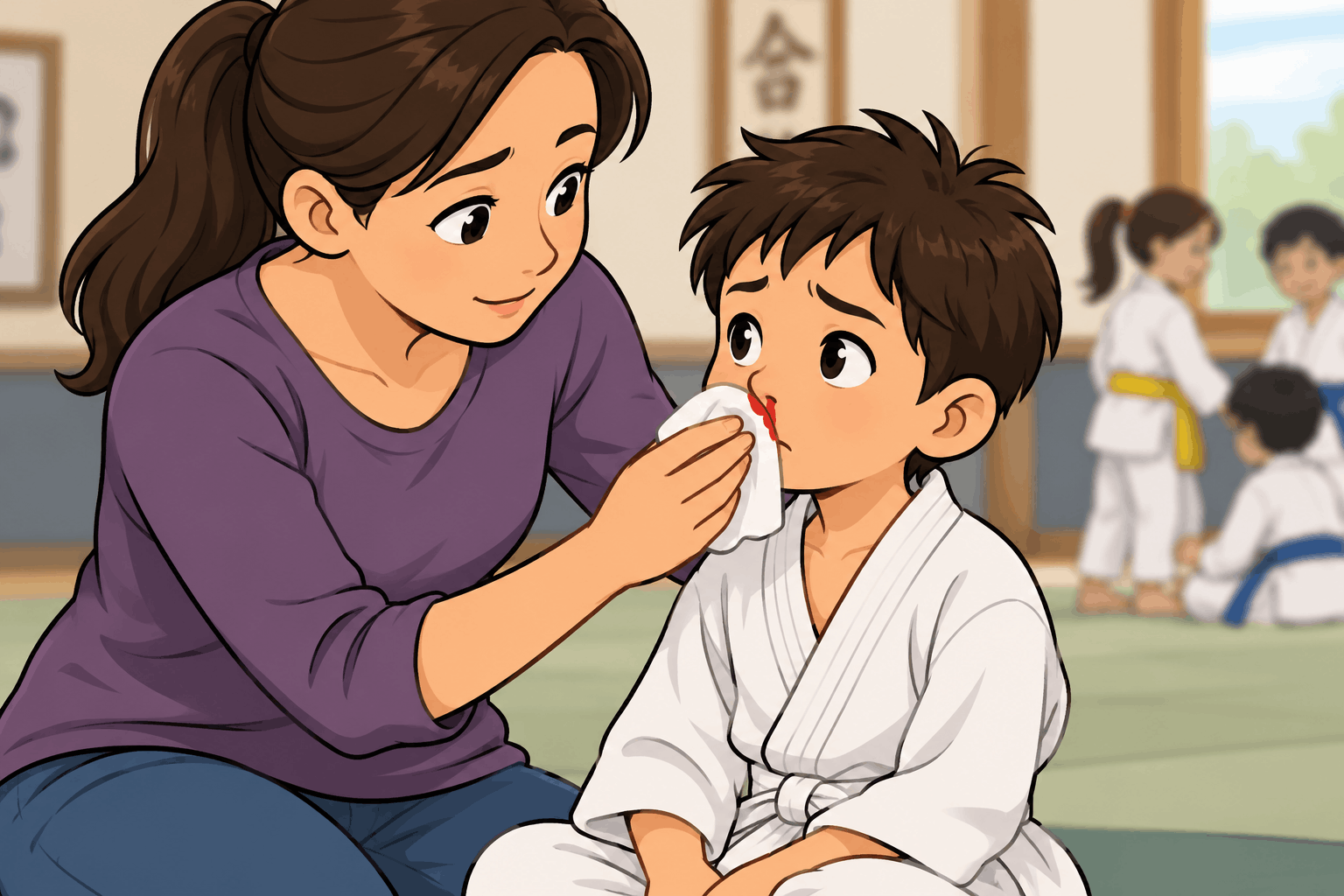
For a young child, however, seeing blood running from their nose can take fear to an entirely different level. I'm bleeding! I can't stop it! Mommy!
Bloody noses can happen for a variety of reasons, including dry air, irritation inside the nose, colds and allergies, certain medications, and minor injuries.
Bloody Noses and Kids' Martial Arts
After teaching martial arts for more than 30 years, I have witnessed my share of bloody noses. In my experience, the nosebleeds I've seen during training have been accidental, and I've never had a student permanently injured as a result of one.
Anytime a child participates in an athletic activity, there is some possibility of bumps, bruises and minor injuries. Soccer, football, baseball, basketball and martial arts all have their own versions of this. Some simply look more dramatic than others.
A bloody nose is particularly dramatic because there's no hiding it.
There's blood on the child's face. It may be on their uniform. Sometimes it's on the instructor or parent trying to help. Everyone in the room immediately knows something happened, and to a young child it can look frightening.
Fortunately, appearance doesn't necessarily tell you how serious an injury is.
Why Do Kids Get Bloody Noses?
The inside of the nose contains small blood vessels that can bleed relatively easily. Dryness, allergies, irritation, nose picking, blowing the nose and minor bumps can all contribute to a nosebleed.
In martial arts, an accidental bump can certainly happen. Kids are learning how to move, work with partners, fall safely and control their bodies. That's one reason responsible instruction and supervision are so important.
Should Parents Worry About a Bloody Nose?
Seeing your child covered in blood can be unsettling, but an occasional nosebleed is common in children and is usually manageable with basic first aid.
What matters is how the child is doing, what caused the bleeding, whether it stops normally, and whether there are other symptoms or signs of a more significant injury. Frequent nosebleeds, unusually heavy bleeding, bleeding that won't stop, or a nosebleed associated with a significant injury should be discussed with an appropriate healthcare professional.
What I've Learned From Teaching Kids
After seeing plenty of bloody noses through the years, I've also noticed something else: kids learn from these little experiences.
The first bloody nose may feel like the end of the world.
The next time, the child realizes, I've been through this before. I'm okay.
Eventually, it can almost become a little badge of honor. I survived the bloody nose. I didn't cry this time. I know what to do, and I know things are going to be okay.
That may sound like a small accomplishment to an adult, but learning how to remain calm when something unexpected happens is part of growing up. It's also one of the lessons children can develop through martial arts training.
What Should You Do for a Bloody Nose?
If your child gets a bloody nose, the most important thing is not to panic. Your reaction can have a tremendous effect on theirs.
For a typical nosebleed:
- Have the child sit upright.
- Have them lean slightly forward rather than backward.
- Pinch the soft portion of the nose.
- Maintain steady pressure for approximately 10–15 minutes without repeatedly releasing the nose to check it.
- Encourage the child to breathe calmly through the mouth.
If the bleeding is heavy, follows a significant injury, causes difficulty breathing, or does not stop after appropriate first aid, seek medical attention.
A Little Blood Doesn't Have to End the Day
One of the things children learn through martial arts is that unexpected things happen. You might fall down. You might bump into someone. You might occasionally get a bloody nose.
What matters is learning how to respond.
At Tri City Aikido in Fremont, children's classes are taught in a cooperative environment where students learn Aikido techniques, safe falling, body control and how to work responsibly with training partners.
For parents looking for a martial art where children can develop confidence, coordination and composure without the pressure of competition, Tri City Aikido offers children's Aikido classes in Fremont for different age groups and experience levels.
And sometimes kids learn another valuable lesson along the way:
A little blood can look pretty scary — but it doesn't necessarily mean something terrible happened.