
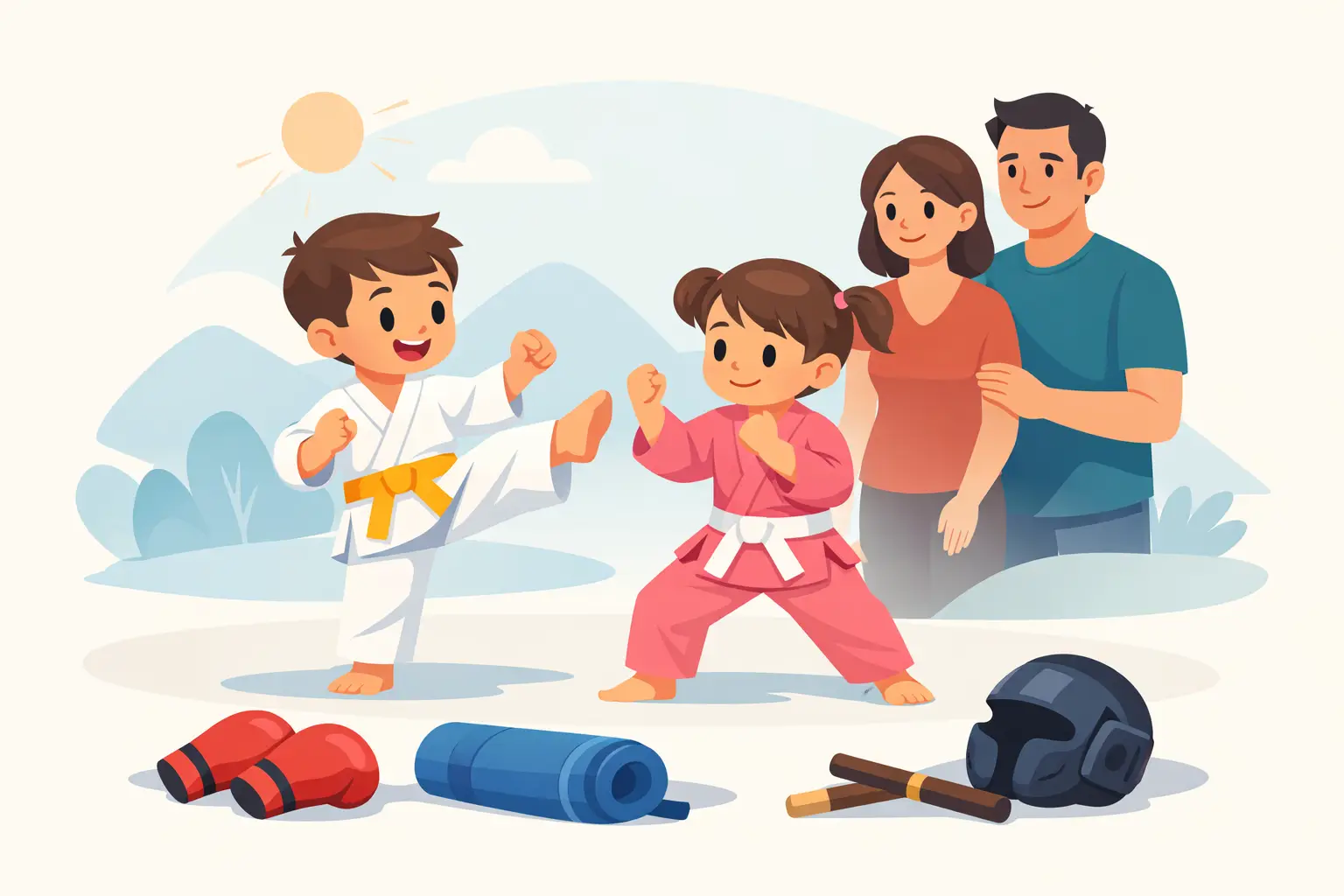
Children can begin Aikido at Tri City Aikido as young as age 4. At this age, the goal is not to have children train like older students. A good martial arts program gives preschoolers a positive physical challenge within clear boundaries. They begin to understand personal space, body control and respect for others while gaining confidence in what their bodies can do. The right setting should feel structured and purposeful, but never intimidating.
Best martial arts for preschoolers: what does "best" really mean?
The best martial art for one preschooler may not be the best choice for another. A very energetic child may benefit from a calm, methodical class that develops patience. A cautious child may need an encouraging instructor who allows time to observe before joining in. In both cases, quality teaching matters more than fast belt promotions, dramatic demonstrations or a crowded schedule.
For preschoolers, the strongest programs share a few foundations. Classes should use simple routines, short activities and clear demonstrations. Instructors should know how to redirect attention without shaming a child, and they should keep physical contact controlled and age-appropriate. Most importantly, children should be taught that martial arts are for awareness, self-control and protecting themselves and others, not for starting conflict.
A young child is still learning left from right, how to wait for a turn and how much force is appropriate in play. These are not necessarily reasons to delay martial arts. They are exactly why patient, age-appropriate instruction can be valuable. The curriculum simply has to meet the child where they are.
What preschool children can learn safely
A well-run class can build useful skills without expecting preschoolers to train like older children. Lessons should focus on posture, balance, coordination and attentive movement. Children may practice stepping, turning, reaching, gentle partner exercises and simple ways to move away from an uncomfortable situation.
Safe falling and rolling are especially valuable skills when introduced gradually. Children naturally run, climb and tumble, but they do not always know how to protect themselves when they lose balance. Learning basic falling and rolling skills under close supervision can improve body awareness while making training enjoyable.
The social lessons are just as significant. A child learns to line up, bow or acknowledge the instructor, listen for a signal and practice with care around classmates. These habits can reinforce focus and consideration for others, although no martial arts class should promise to transform behavior overnight. Progress at this age is often quiet: a child who once ran across the mat may begin waiting for the next instruction, or a shy child may gradually volunteer to demonstrate a movement.
How different martial arts suit young children
Several martial arts can work well for preschoolers when they are taught by experienced children's instructors. The distinction is less about declaring one style superior and more about understanding the experience each one offers.
Karate and Taekwondo often use clear stances, basic strikes and kicking drills. Many children enjoy their visible structure and energetic movement. Parents should ask how the school teaches control, because preschoolers need repeated guidance on keeping hands and feet safe around partners.
Brazilian Jiu-Jitsu introduces close-range grappling, positions and movement on the ground. It can develop coordination and composure, but it also involves more close physical contact. For a child who dislikes being held or becomes overwhelmed in busy physical play, a gentle, well-supervised introduction is essential.
Judo teaches balance, grips and throws, with strong attention to safe falling. It can be an excellent activity, though the pace and partner work should be adapted carefully for very young children.
Aikido can be particularly well suited to families looking for a non-competitive approach centered on balance, awareness and respectful partner practice. Rather than teaching children to meet force with force, Aikido explores positioning, movement and controlled responses. For preschoolers, this begins with fundamentals: standing well, moving safely, learning basic falling skills and treating training partners respectfully. More advanced techniques are introduced later as children develop the maturity, coordination and technical foundation for them.
The instructor matters more than the style
A traditional name on the sign does not automatically make a class right for a four-year-old. Parents should watch how the instructor works with the youngest children. Are instructions brief and understandable? Does the teacher demonstrate calm authority? Is there a clear routine when a child becomes distracted, upset or overly excited?
Look for a dojo that separates age groups rather than expecting preschoolers to keep up with teenagers or adults. Children need instruction paced for their physical development and attention span. They also need enough supervision for partner work, rolling practice and any activity involving movement near other children.
A good teacher does not mistake loudness for confidence. Some children will speak up immediately; others will spend their first classes watching closely. Both responses are normal. The instructor should help each child participate safely without forcing a performance.
Parents can also ask how progression works. A belt or recognition system can motivate young children, but it should reflect consistent effort, growing understanding and good dojo conduct. Rapid advancement may feel exciting in the short term, yet lasting confidence comes from learning skills properly and being proud of steady improvement.
Questions to ask before enrolling
A visit or introductory class gives parents information that a schedule cannot. Notice whether the space is clean, organized and free from unnecessary hazards. Observe whether older students model respect and whether the instructor is attentive to each child's level of experience.
Before choosing a class, it is sensible to ask about these practical points:
- What is the minimum age for beginning classes?
- Is the class designed specifically for preschool-age children?
- How do instructors teach safe falling, partner contact and personal boundaries?
- How closely are children supervised during active exercises?
- What happens when a child needs a break, feels nervous or has difficulty following directions?
- Can parents observe or try an introductory lesson before making an ongoing commitment?
A school should answer these questions directly. Safety policies matter, but so does the atmosphere on the mat. Preschoolers learn best when they know what is expected and feel safe enough to make small mistakes.
Signs your child may be ready
Children do not need perfect concentration, advanced coordination or a naturally competitive personality to begin. A child may be ready if they can take simple directions, spend a short period in a group activity and separate from a parent with reasonable comfort. Some hesitation is entirely normal.
If your child is not yet ready to participate independently, there is no need to rush. A few months can make a meaningful difference at this age. Equally, do not assume a lively child is unsuitable. The right class may provide exactly the kind of structure they need, provided the instructor has realistic expectations.
At Tri City Aikido in Fremont, children can begin Aikido at age 4. Our Beginner Kids Aikido program for ages 4–6 is specifically designed for young children within a traditional dojo setting. Training emphasizes safe movement, listening, coordination, respect and personal development rather than competition. A free introductory class gives parents an opportunity to see how their child responds to the environment before choosing regular training.
The best first class is one where your child leaves feeling proud, not pressured. They may remember learning a roll, standing still for a bow or making a new friend. Those small moments are where lasting confidence and respect can begin.